YOTI HUB REDESIGN
I was the lead product designer on the Hub redesign project, responsible for experience strategy, information architecture, core interaction patterns, and high-fidelity UI. I worked closely with product, engineering, and research to gather internal and external insights that directly shaped the design and helped deliver a single, unified release.
Redesigning Yoti Hub into a modern, scalable platform for managing identity services.

CONTEXT
The Hub is Yoti’s main platform for clients to set up and manage their services.
Over the years it had grown in scope and complexity, but its interface and experience stayed stuck in an old design system. As a result, it became harder to use, harder to understand, and out of sync with Yoti’s brand and standards. The goal of this project was to deliver a complete redesign of the Hub in a single release, creating a modern, mobile-friendly platform that brought everything into one clear and cohesive experience.
the problem
The Hub had become a critical part of Yoti’s product ecosystem, but its experience no longer reflected the reality of how the platform was being used. As new services, organisations, (and soon to come workflows) were added over time, the product grew in complexity, while the interface remained stuck in an outdated design system. This created a growing gap between what the Hub could do and how clearly it communicated that to its users. As a result:
- Navigation and structure felt inconsistent and hard to predict
- Key actions like managing organisations, services, and billing were fragmented
- The experience did not meet modern accessibility, mobile, or compliance standards
- The visual design was misaligned with Yoti’s current brand and product direction
What started as a simple setup tool had become a core business platform. The challenge was not just to refresh the UI, but to redesign the Hub into a clear, scalable, and trustworthy product that could support Yoti’s future growth.
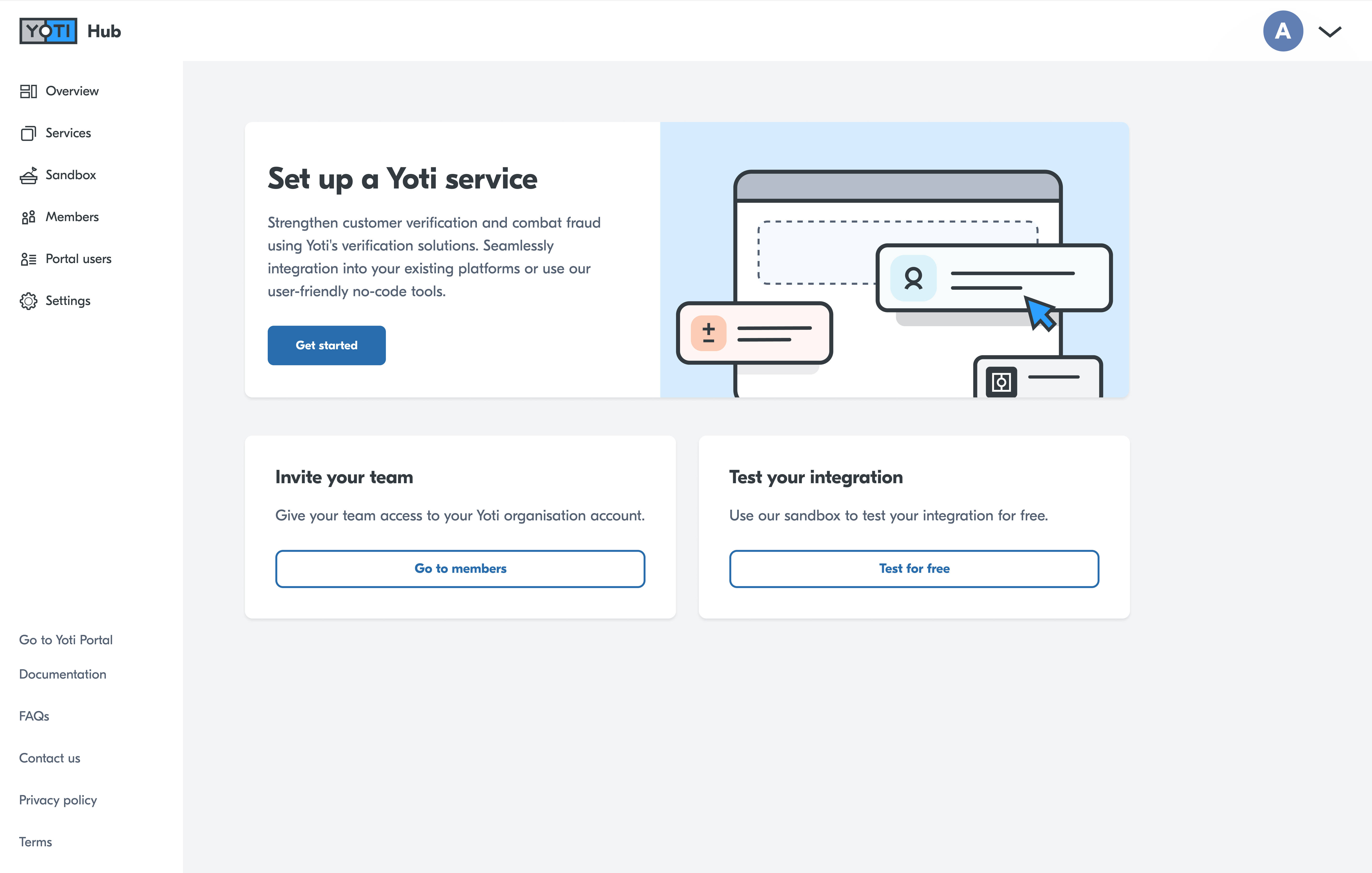
the Old yoti hub

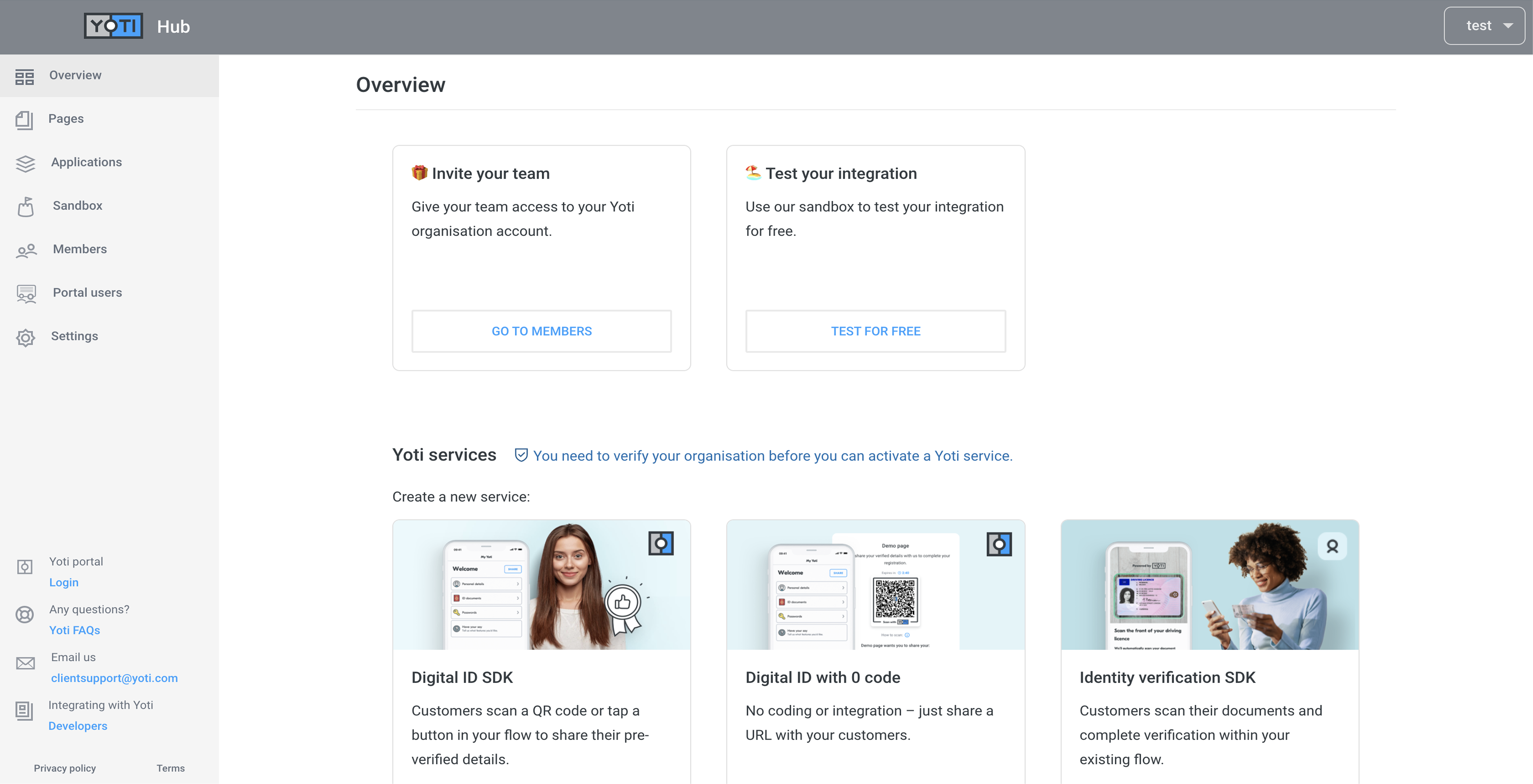


STRATEGY
To make the project achievable, we structured the work into clear layers and rebuilt the product from the inside out:
1. Establish a shared foundation
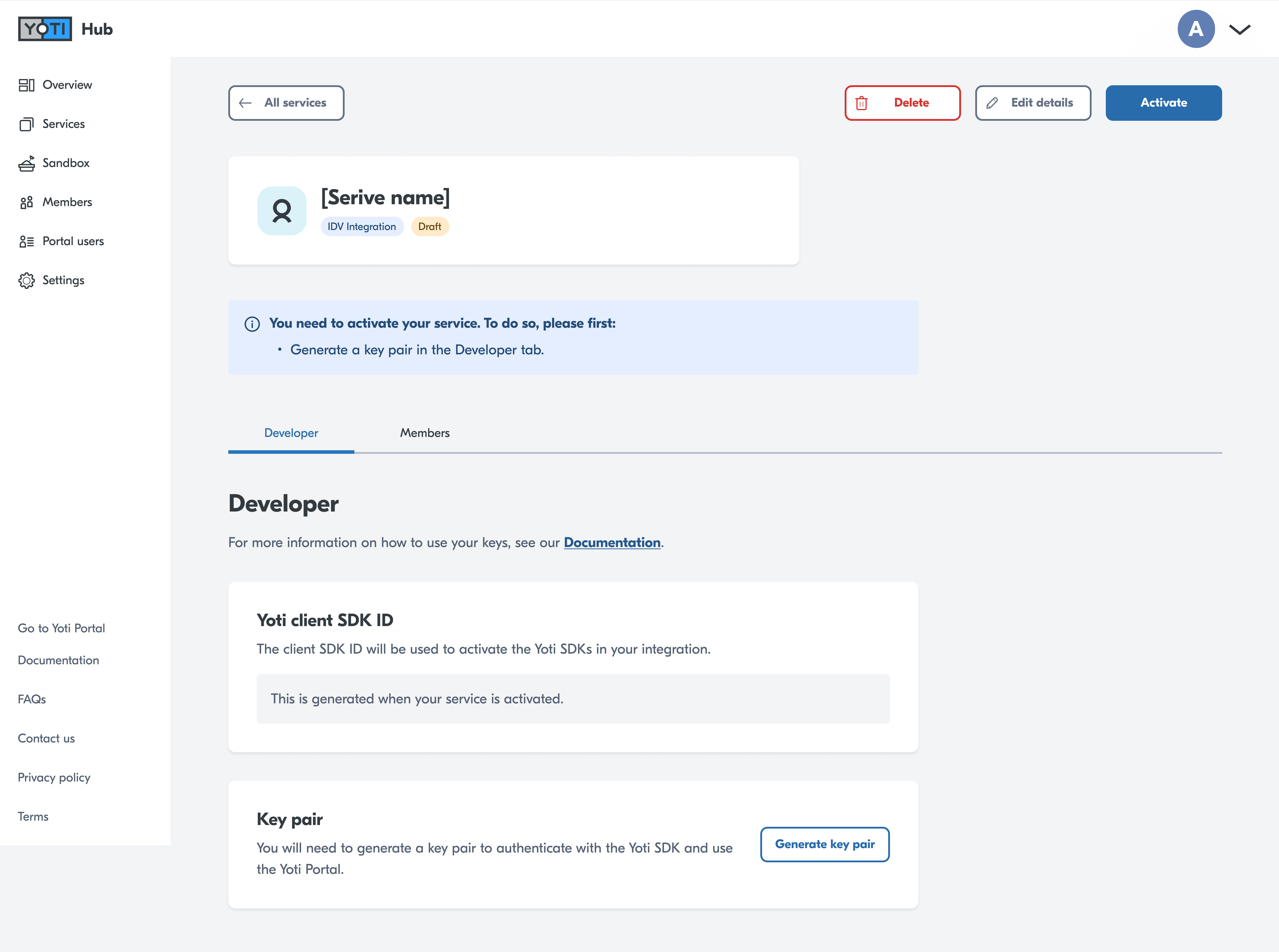
We first defined a consistent layout system (navigation, headers, modals, notifications) so every area of the Hub would feel coherent and scalable.
2. Stabilise the core workflows
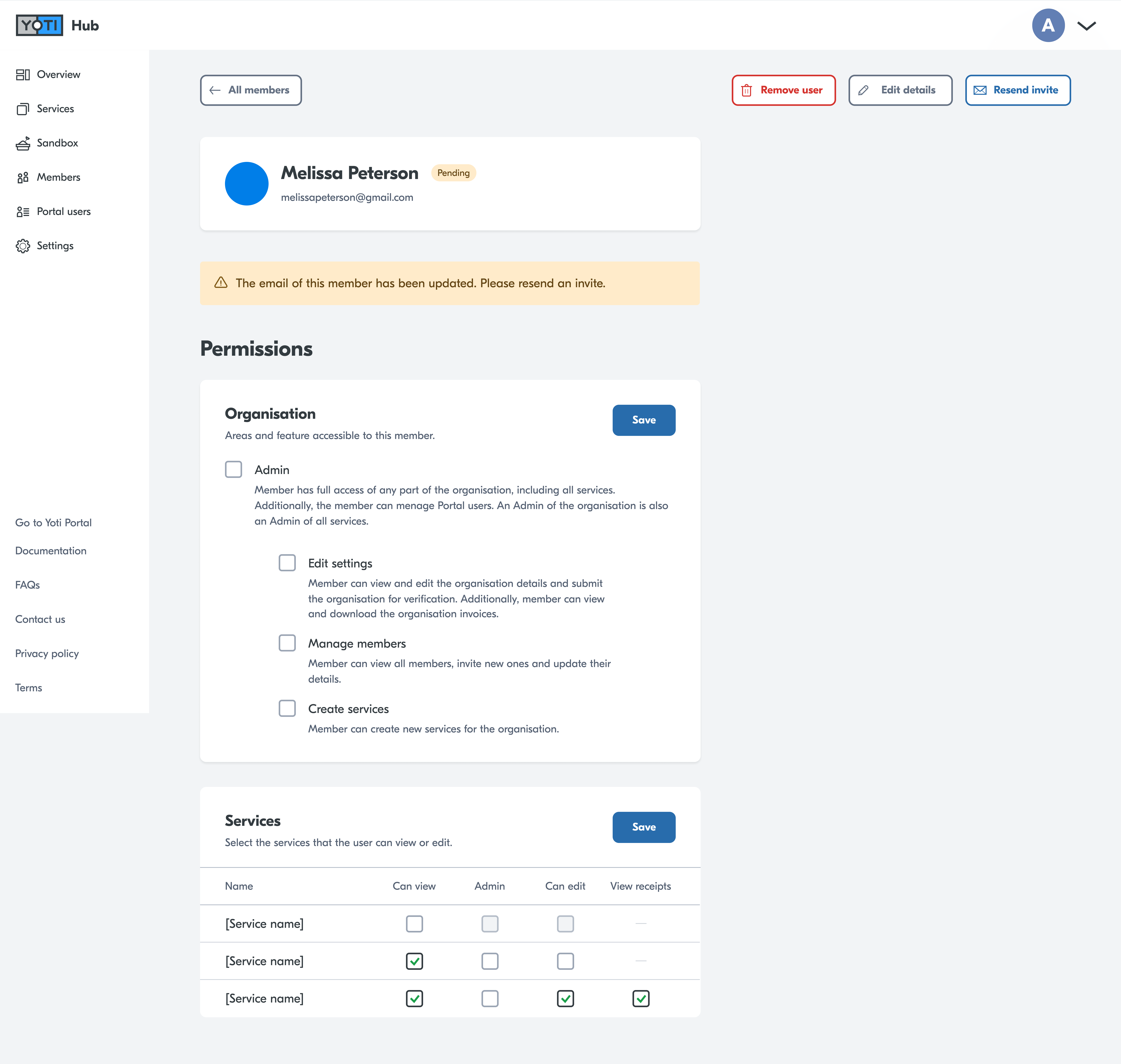
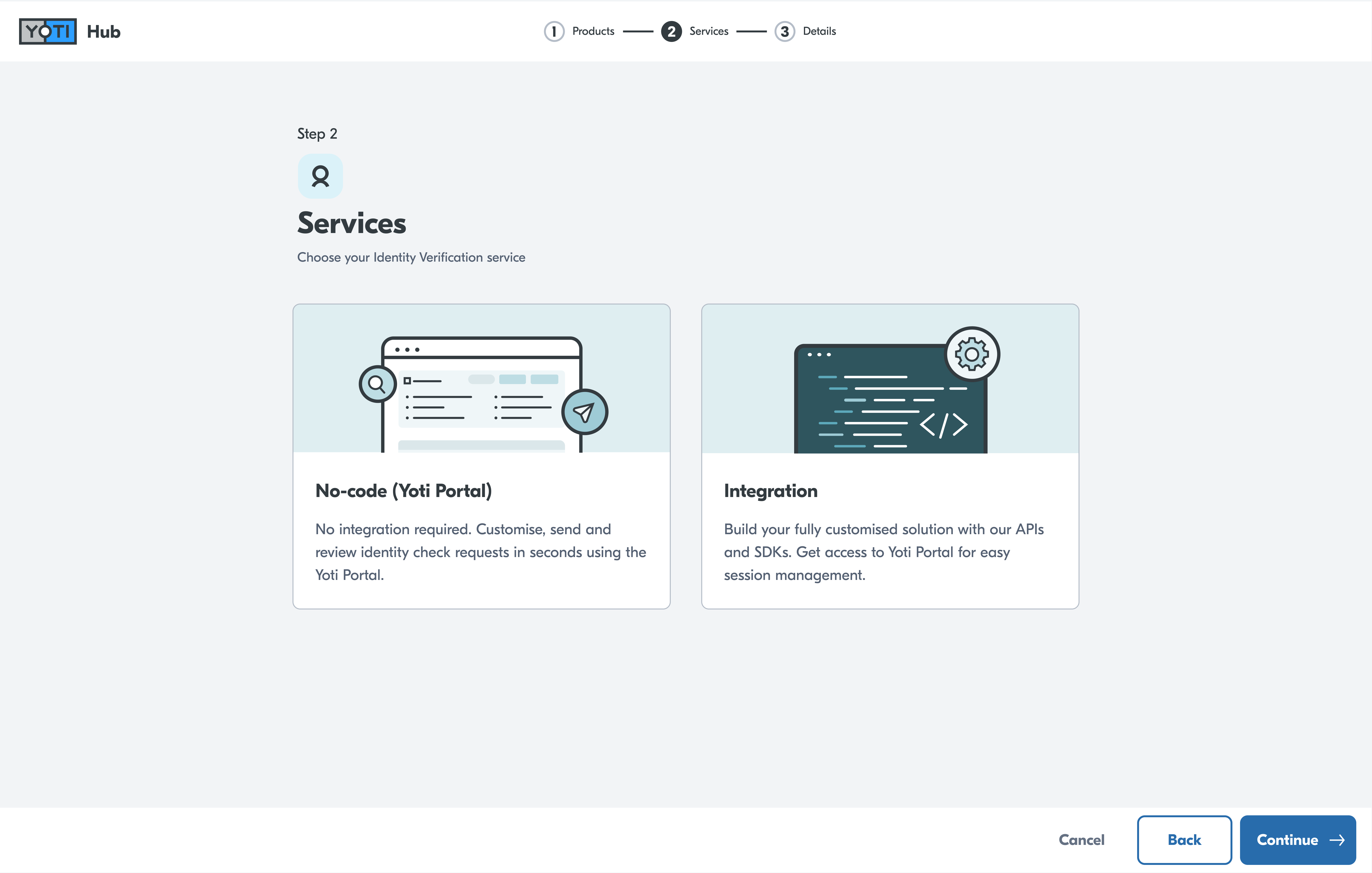
We then focused on the most commonly used and least ambiguous areas, such as Sandbox, Members, and Overview, to validate patterns and reduce uncertainty early.
3. Reorganise the organisation space
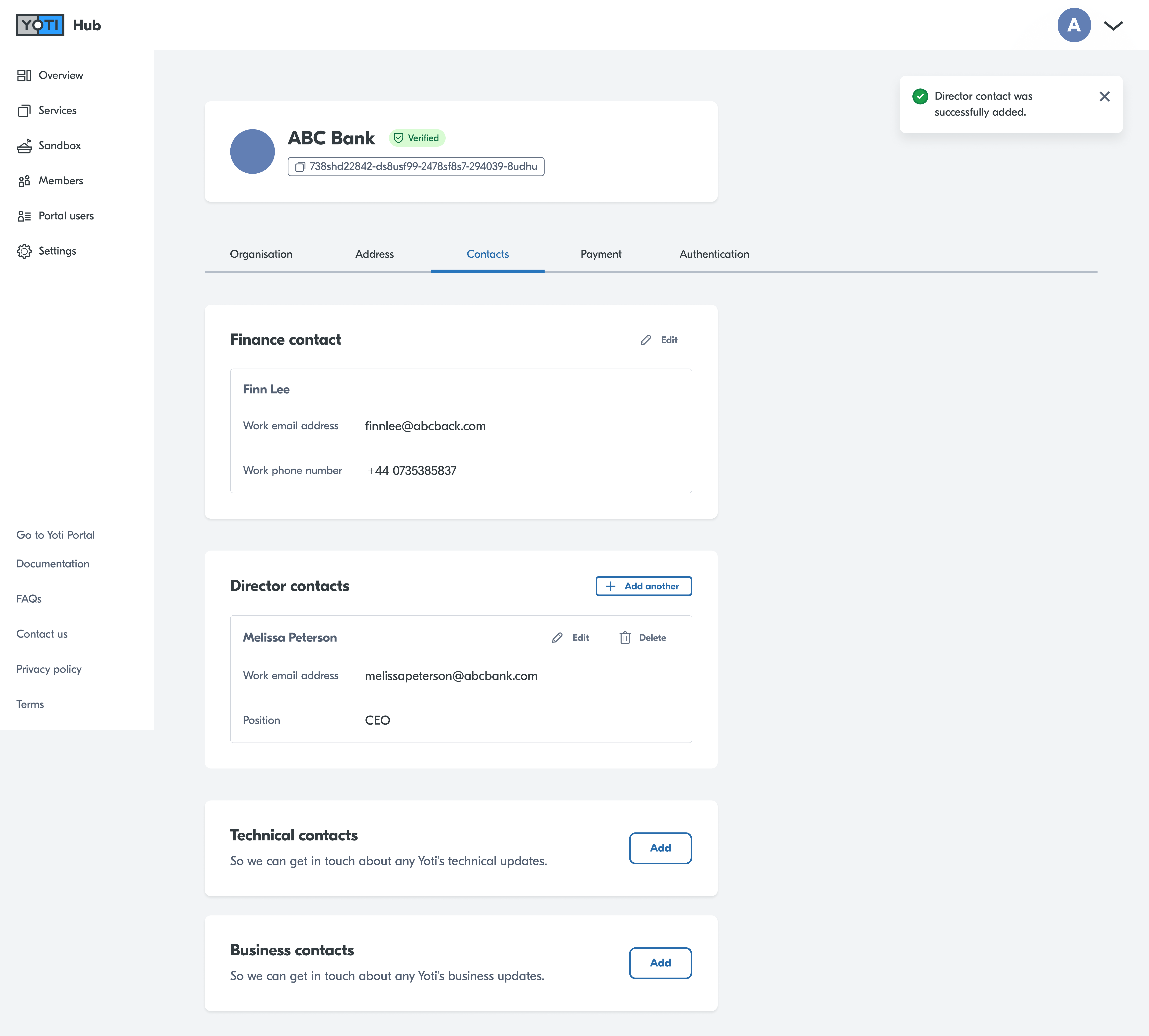
Next, we tackled billing and organisation management, separating financial data from operational data to improve clarity and future scalability.
4. Plan for future complexity without blocking delivery
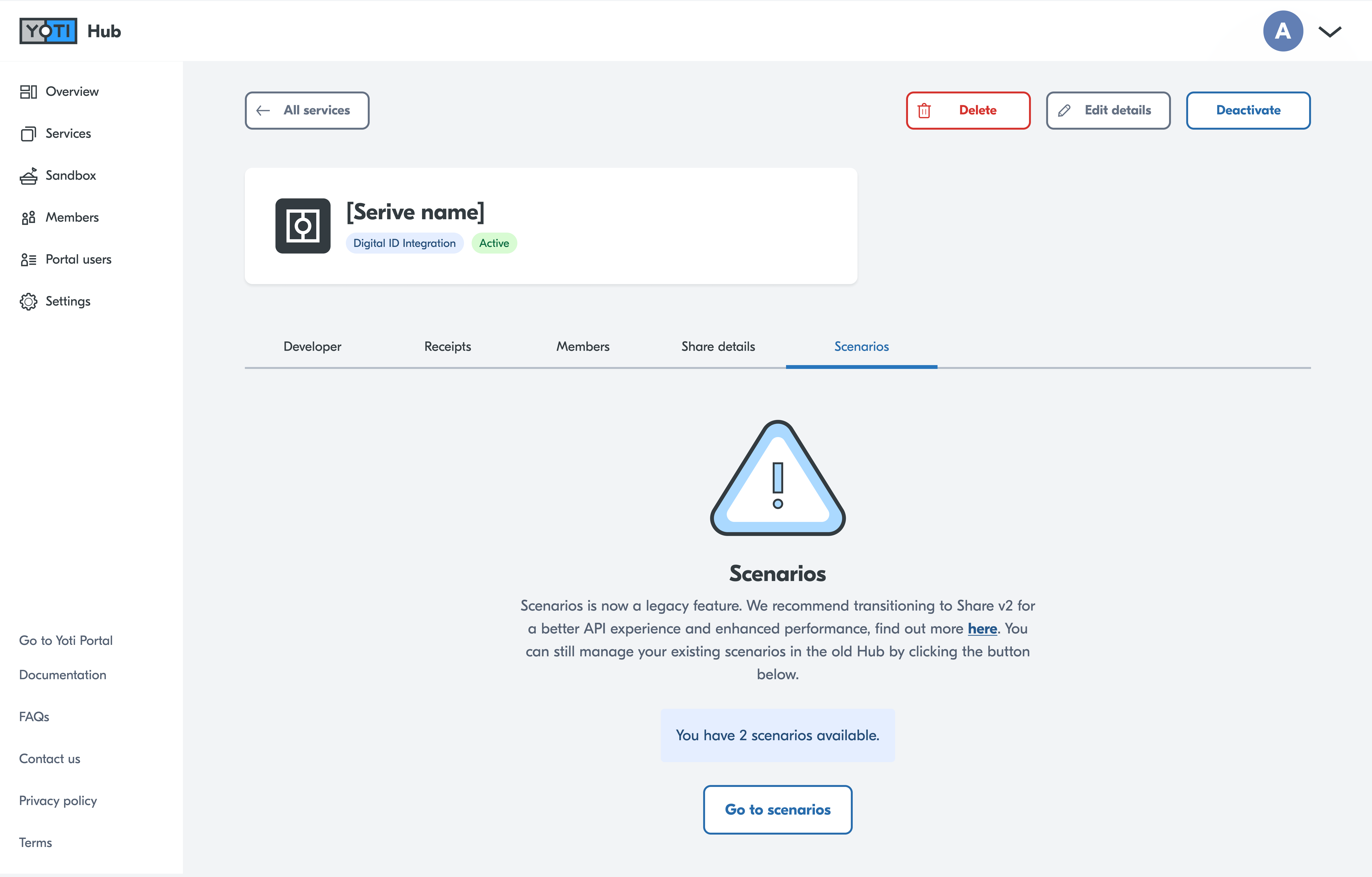
Areas like Receipts, Data and Scenarios were designed to be compatible with future features but intentionally not considered as part of the redesign to avoid delaying the core platform.
5. Unify services under a clear model
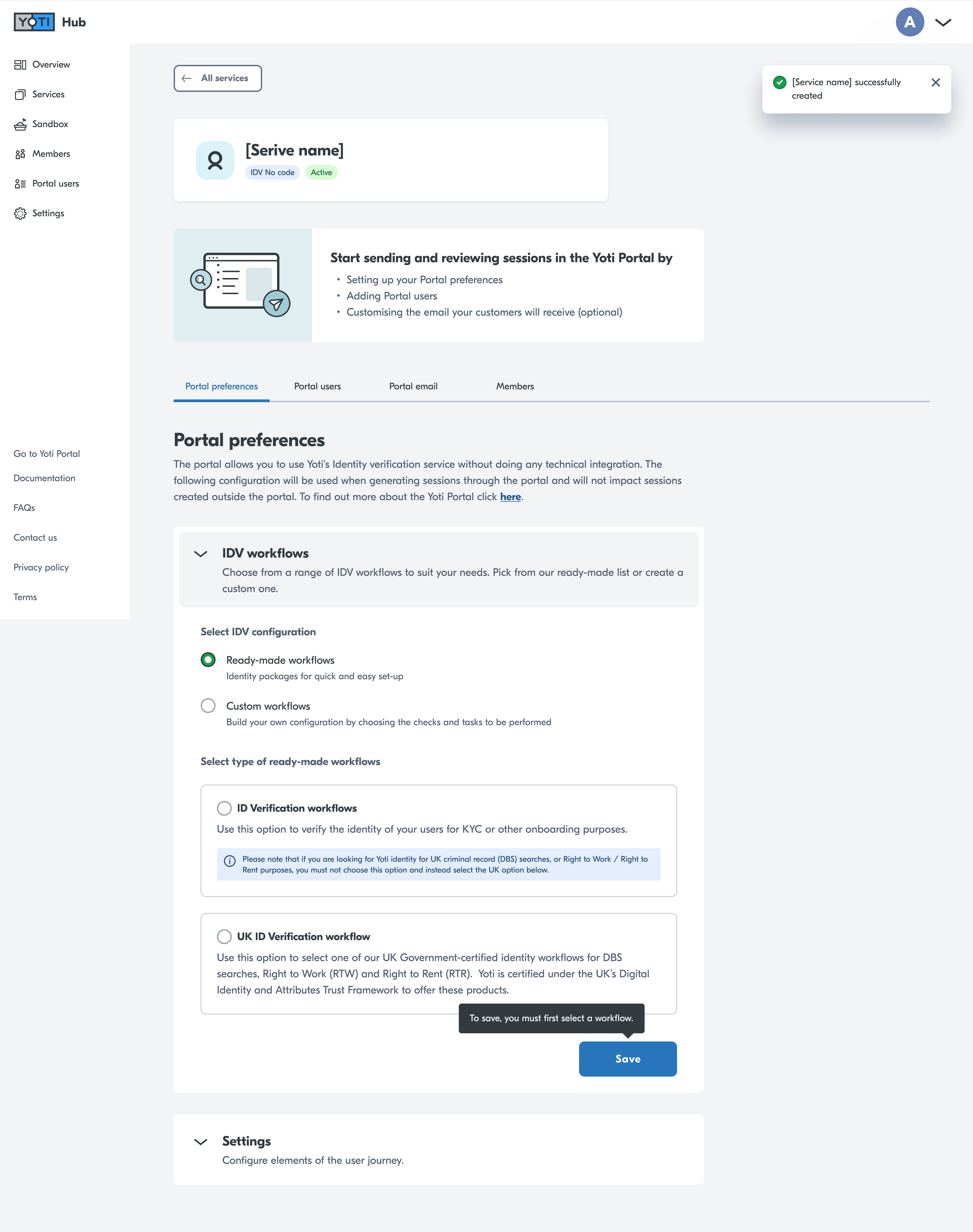
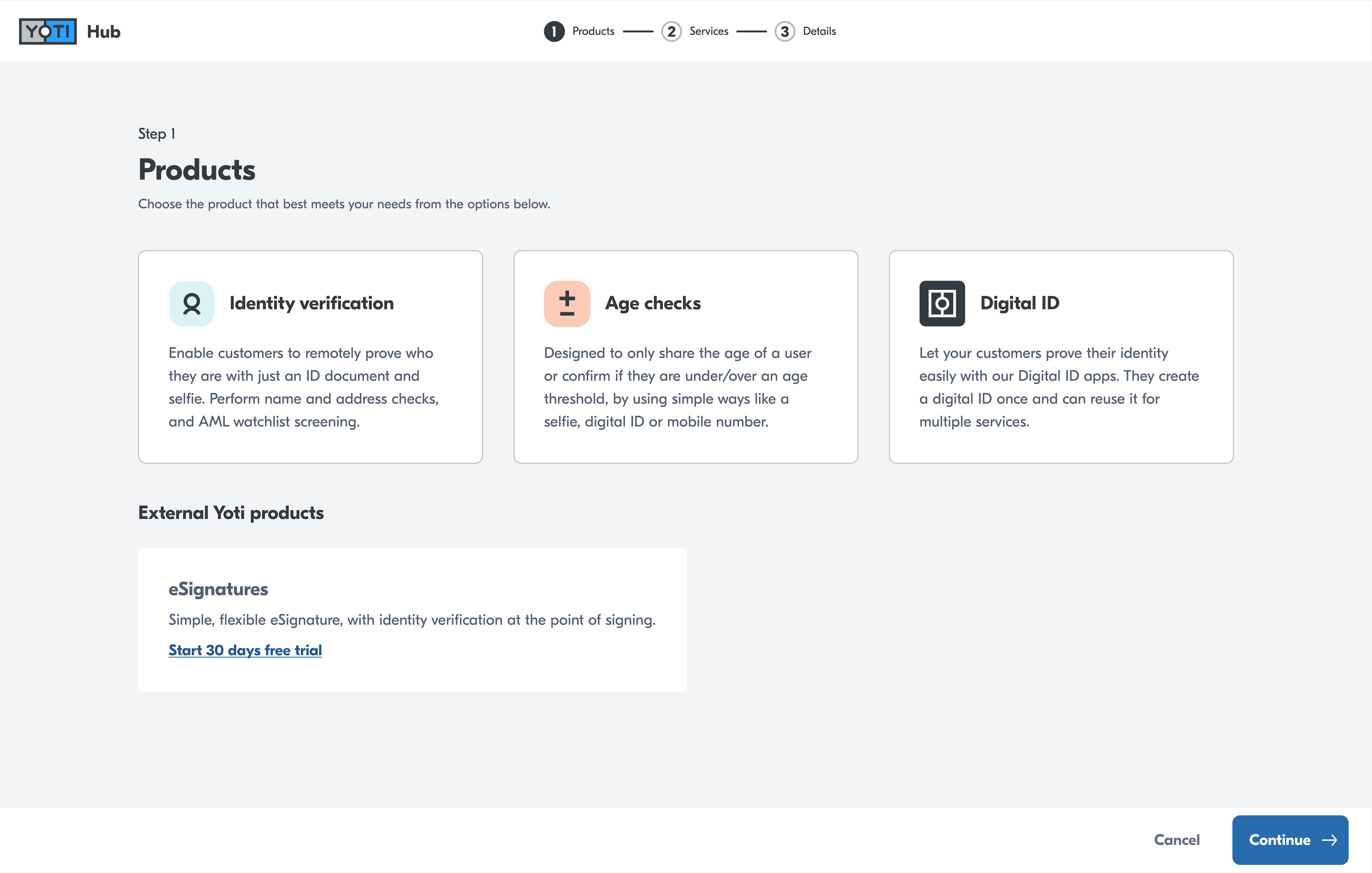
Finally, we redefined how Applications, Services, and Solutions were structured, aligning Hub and Portal semantics and preparing the product for website integration and legacy migration. This approach allowed us to ship a complete, modern Hub in one release while still leaving room for future growth and complexity.
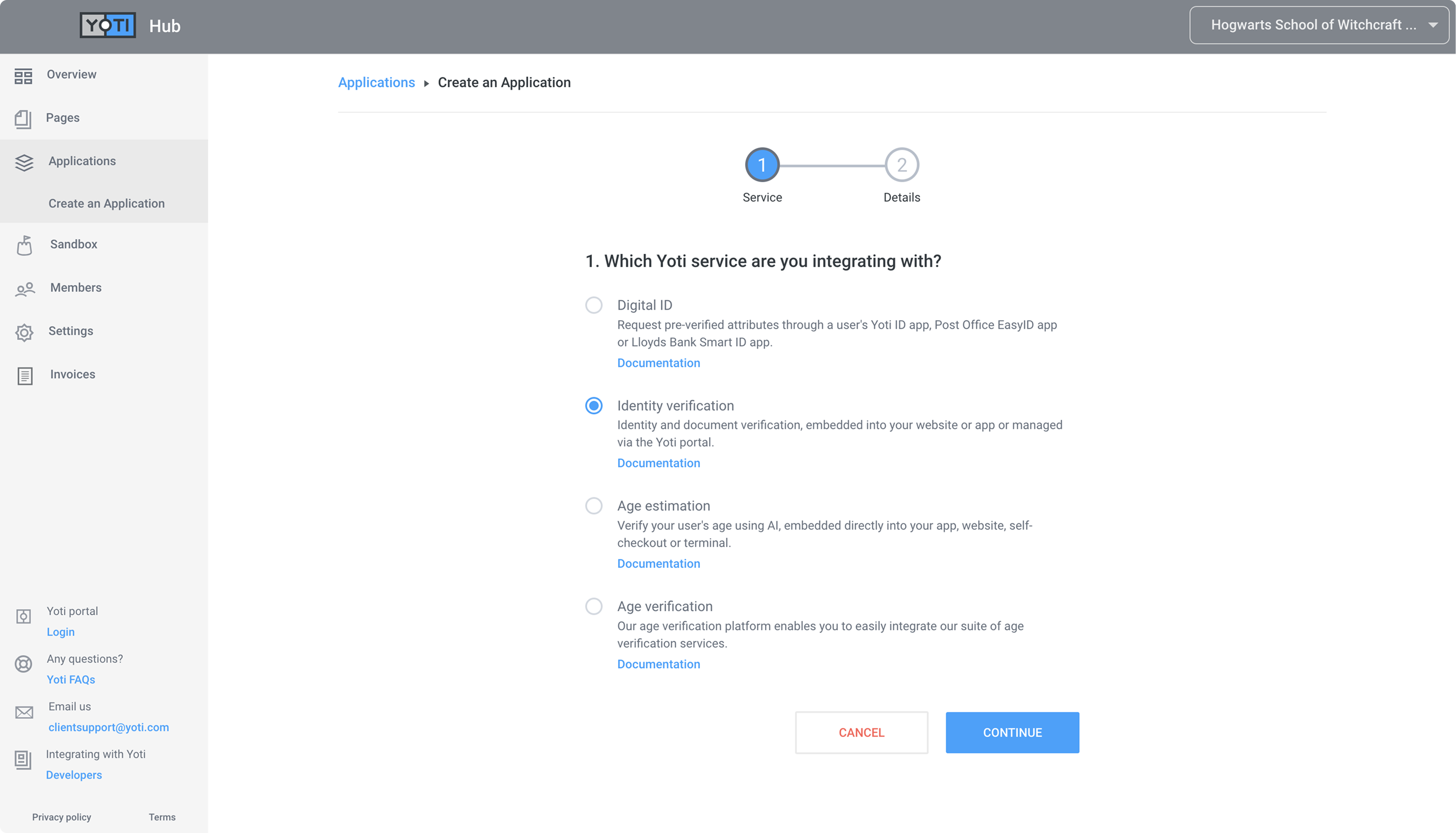
new yoti hub